Identifying the Right Moment to Transition from Single-Phase to Three-Phase Power
In Brisbane, many homes still rely on single-phase power, which is typically adequate for basic energy needs. However, as your energy consumption grows beyond what a standard switchboard can handle, the necessity to transition to three-phase power becomes increasingly pressing. If you are considering the installation of a solar power system, adding an EV charger, upgrading to ducted air conditioning, or modernising your home with new appliances, relying solely on a single-phase system may not sufficiently accommodate your electrical demands.
Upgrading to three-phase power significantly enhances your home’s electrical capacity by distributing electricity across three distinct wires instead of just one. This enhancement is not solely beneficial for industrial applications; a growing number of Brisbane homeowners recognise the importance of upgrading to three-phase systems as their electrical needs expand and diversify. This shift allows for a more robust and reliable power supply that can meet the increasing demands of modern living.
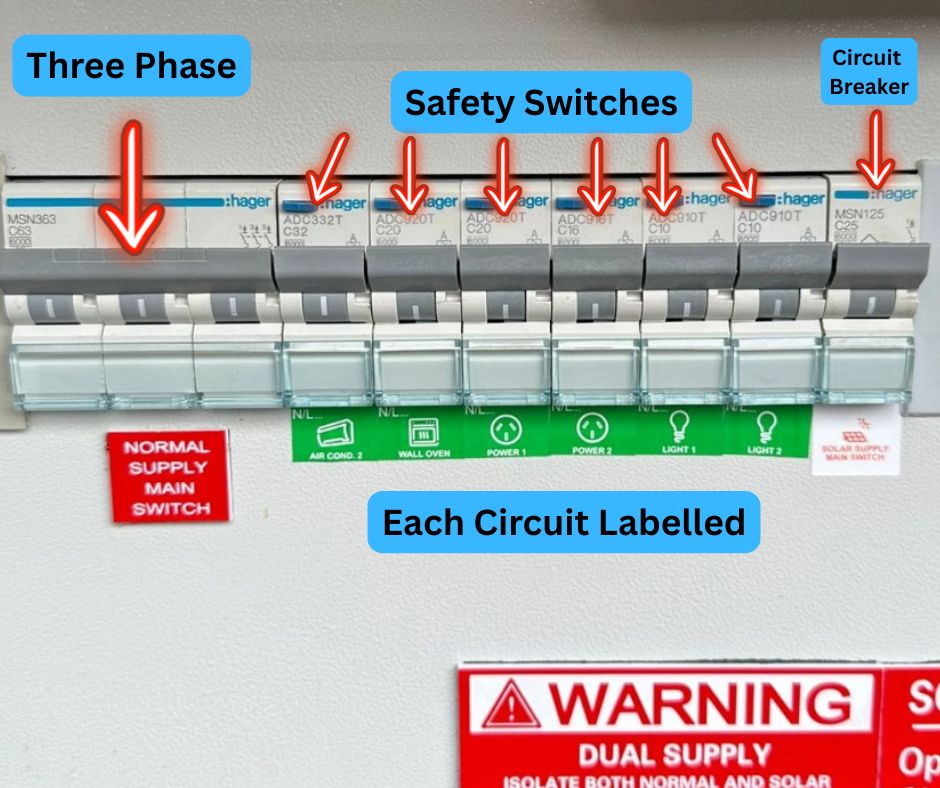
Recognising the Signs: Six Clear Indicators That You May Need Three-Phase Power at Home
1. Are You in Need of a High-Speed EV Charger?
If you are investing in an electric vehicle, it is highly likely that you are exploring a variety of home charging options. It is essential to understand the significant differences between single-phase chargers and three-phase chargers: the charging speed and efficiency can greatly impact your daily routine.
- Single-phase (7kW): Provides approximately 40-50km of range for each hour of charging, making it suitable for typical daily use.
- Three-phase (22kW): Offers around 120-150km of range for each hour of charging, perfect for those with higher demands.
For most daily driving needs, a 7kW charger is generally adequate. You can plug in overnight and wake up to a fully charged vehicle, ready for the day ahead. However, for those who frequently embark on long journeys, own multiple EVs, or desire faster charging capabilities, a 22kW three-phase charger can significantly enhance your charging experience and efficiency, ensuring you spend less time waiting and more time driving.
Moreover, investing in a three-phase EV charger not only meets your current needs but also prepares your home for future advancements. As battery technologies evolve and the demand for electric vehicles continues to rise, the necessity for quicker and more efficient charging solutions will undoubtedly increase.
→ Explore our EV charger installation services in Brisbane
2. Are You Planning to Install Solar Panels Exceeding 5kW?
For solar energy systems that exceed 5kW, Energex often requires a three-phase power configuration. The reasoning behind this requirement is straightforward: it enables your solar system to distribute energy evenly across all three phases, which helps maintain stability within the local electricity grid. This balance is crucial for both efficiency and reliability.
If you are currently utilising a single-phase system and wish to install a larger solar array, your typical options include:
- Restricting the capacity of your system to 5kW, which may limit your potential energy production.
- Upgrading to a three-phase power supply, allowing for maximum efficiency and output.
- Implementing a system with export limitations, which may curtail potential energy production and revenue.
For households that are genuinely committed to maximising their solar investment — particularly those incorporating battery storage — upgrading to three-phase power represents a strategic solution. It facilitates future expansion without the risk of exceeding export limits, thereby enhancing your return on investment and energy independence.
→ Learn more about solar installation in Brisbane
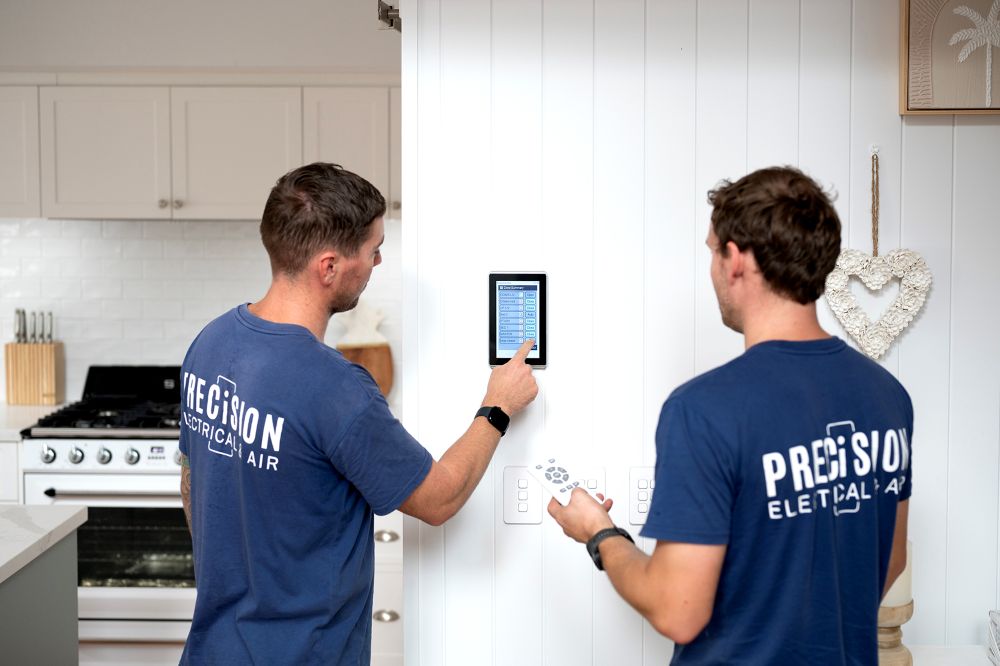
3. Are You Considering Installing Ducted Air Conditioning?
Ducted air conditioning systems deliver comprehensive climate control throughout your home through ceiling-mounted vents and a central unit. Their popularity in Brisbane arises from their ability to provide whole-house comfort without the visual clutter associated with multiple wall-mounted units, enhancing the aesthetic appeal of your living space.
However, ducted systems consume considerable power. Larger units, typically rated at 14kW and above, often necessitate three-phase power to operate effectively without causing voltage drops and performance issues. Even smaller ducted systems can place significant strain on a single-phase supply, particularly when other appliances are in use simultaneously.
If you plan to install ducted air conditioning alongside existing split systems, your current electrical configuration might struggle to manage the total load effectively. A common sign of an overloaded system is the dimming of lights when the air conditioning unit activates, indicating that your system may not be able to handle the demand.
→ Find out if you require a three-phase switchboard for your air conditioning
4. Are You Renovating with an Induction Cooktop and Electric Appliances?
Modern kitchens are increasingly adopting all-electric designs. The demand for induction cooktops, electric ovens, heat pump hot water systems, and integrated appliances can rapidly elevate your power requirements.
A standard induction cooktop typically consumes around 7-8kW at peak operation. When you factor in an electric oven (3-5kW) and a heat pump, along with your existing air conditioning and lighting circuits, you may find yourself nearing the capacity limits of a single-phase supply. This situation can lead to inefficiencies and potential safety hazards.
If you are undertaking a significant kitchen renovation or building a new home, considering a three-phase electrical setup from the outset is advisable. It is generally more cost-effective to implement during the construction phase rather than attempting to retrofit later on, which can be more intrusive and costly.
→ Review the power requirements for induction cooktops
5. Do You Operate a Home Workshop with Heavy Machinery?
Dedicated home workshops require substantial power resources to function effectively. Equipment such as welders, compressors, dust extractors, and machinery like lathes or table saws can draw significant current, often surpassing what a single-phase supply can reliably support.
Implementing three-phase power allows you to utilise professional-grade machinery without the risk of tripping circuit breakers or encountering voltage drops. Additionally, motors operating on three-phase power function more efficiently and generally possess a longer operational lifespan, reducing long-term costs associated with maintenance and replacements.
If you are planning to establish a workshop in your shed or garage for activities such as woodworking, metalworking, or automotive projects, transitioning to three-phase power significantly broadens your options for equipment, enabling you to pursue complex projects with ease.
→ Explore our workshop and shed electrical fitouts in Brisbane
6. Has Your Electrician Advised That You’re at Capacity?
Sometimes, the most clear-cut sign that a power upgrade is essential comes directly from your electrician. If you request the addition of a new circuit and they inform you that there is no available capacity, it typically indicates several critical issues:
- Your switchboard lacks spare capacity to support additional circuits.
- Your main power supply cannot accommodate the increased load from new devices.
- Adding further circuits may lead to frequent breaker tripping, which can be both inconvenient and hazardous.
If you find yourself in this situation and are considering the addition of solar power, EV charging, air conditioning, or other electrical enhancements, a standard switchboard upgrade may not be sufficient. Upgrading to three-phase power could be essential to expand your supply capacity beyond simply reorganising your existing setup, ensuring that your home remains safe and functional as your needs evolve.
Essential Quick Reference Checklist: Assessing Your Need for Three-Phase Power
If two or more of the following statements resonate with your current situation, it may be time to seriously consider transitioning to three-phase power:
- ☐ You wish to install a 22kW EV charger instead of a 7kW model, ensuring faster charging times.
- ☐ You are planning to install solar panels that exceed 5kW, allowing for greater energy production.
- ☐ You currently have or intend to install ducted air conditioning systems rated at 14kW or higher, requiring additional power.
- ☐ You are renovating with an induction cooktop and electric oven, significantly increasing your power consumption.
- ☐ You operate a home workshop that utilises heavy machinery, necessitating a reliable power supply.
- ☐ Your electrician has indicated that your system is at capacity, limiting your ability to add new circuits.
- ☐ You notice lights dimming when appliances activate, suggesting an overloaded electrical system.
- ☐ Circuit breakers frequently trip when multiple devices are operational, indicating insufficient power supply.
If only one applies: You likely do not require three-phase power. In such instances, a switchboard upgrade or improved load management could provide a more economical solution.
If three or more apply: Transitioning to three-phase power is probably the most sensible choice, particularly if you anticipate making multiple upgrades shortly. Addressing all these needs simultaneously can be more cost-effective than making incremental upgrades over time, ensuring that your electrical system is robust and future-proof.
What Financial Investment is Required for Upgrading to Three-Phase Power in Brisbane?
Typically, residential upgrades to three-phase power range from $3,500 to $6,000, which encompasses several essential components:
- Installation of a new three-phase switchboard to enhance your power management capabilities.
- Application and approval processes through Energex, ensuring compliance with local regulations.
- New metering setup to accurately track your energy consumption.
- Cabling installation from the street to the switchboard, necessary for the new power supply.
Costs can fluctuate based on several factors, including:
- The distance from your property to the street, which may affect installation complexity.
- Whether the connection is underground or overhead, influencing labour and material costs.
- The condition and specifications of your existing switchboard, which may require upgrades or modifications.
- The need for additional work such as asbestos removal, which can add to the overall expense.
Our team provides fixed quotes following a comprehensive inspection to ensure transparency and prevent unexpected expenses, allowing you to budget effectively for your upgrade.
What is the Anticipated Timeframe for Installing Three-Phase Power?
The complete process typically takes around 2-4 weeks from the initial inquiry to the project’s completion, ensuring a smooth transition:
| Step | Estimated Timeframe |
|---|---|
| Site assessment and quote provision | 1-3 days |
| Energex application and approval | 5-10 business days |
| Installation of the new system | 4-8 hours |
| Energex meter installation | 1-5 business days |
During the switchboard installation, you can expect a power outage lasting between 4-8 hours, which we will schedule to minimise disruption to your daily routine.
Will Transitioning to Three-Phase Power Affect My Electricity Bills?
If you increase your power consumption, it follows that your electricity bills will rise, as you are billed for the kilowatt-hours you utilise rather than the type of connection you have. Your daily supply charge may experience a slight increase of approximately $0.10-$0.30 per day (which totals around $50-100 annually), but this potential rise is often offset by several benefits:
- A larger solar system resulting in increased feed-in credits, enhancing your financial return.
- Enhanced efficiency from motors and appliances, which can reduce overall energy consumption.
- Reduced strain on your existing electrical system, leading to fewer maintenance issues and prolonging the lifespan of your equipment.
Seeking Expert Guidance? We Provide Honest and Reliable Advice
At Precision Electrical & Air, we thoroughly evaluate your existing electrical configuration alongside your future plans before offering any recommendations tailored to your unique situation.
In specific circumstances, transitioning to three-phase power is indeed the best course of action. However, often a simpler switchboard upgrade is sufficient for your needs. There are also instances when we determine that your current single-phase system remains adequate and safe. Our priority is to cater to your needs without upselling; if your existing system continues to perform effectively, we will advise you to retain it.
Next Steps for Your Power Upgrade: What Should You Do?
Contact us at 0423 163 359 for a complimentary assessment, or request a quote online. We are here to support you through the upgrade process.
Based in Acacia Ridge, we proudly serve all areas across Brisbane’s southside and beyond.→ Discover our three-phase power installation services in Brisbane
The Article: Do You Need Three-Phase Power at Home? 6 Signs Brisbane Homeowners Should Upgrade first appeared on https://writebuff.com
The Article Three-Phase Power at Home: 6 Signs Brisbane Homeowners Need to Upgrade Was Found On https://limitsofstrategy.com
The Article Three-Phase Power: 6 Signs Brisbane Homes Need an Upgrade found first on https://electroquench.com